What Happens When Load Securing Fails?
The legal and financial consequences of inadequate load securing are severe and far-reaching. German law holds multiple parties responsible: the driver, the vehicle operator, and the loading personnel can all face penalties.
Fines and penalties: Violations of StVO §22 carry fines starting at 35 EUR for minor infractions, but can reach up to 75,000 EUR for commercial operators in serious cases. If an accident results from inadequate load securing, criminal charges for negligent bodily harm or even manslaughter are possible.
Insurance implications: Transport insurers can reduce or deny claims if the cargo was not properly secured according to applicable standards. If an unsecured pallet jack causes damage to transported goods, the carrier's liability insurance may invoke contributory negligence, leaving the operator to cover the costs out of pocket.
Employer liability: Under DGUV regulations, employers have a duty of care to ensure safe working conditions. If an employee is injured by an unsecured pallet jack that shifted during transport, the employer faces claims from the statutory accident insurance carrier (Berufsgenossenschaft) through recourse proceedings.
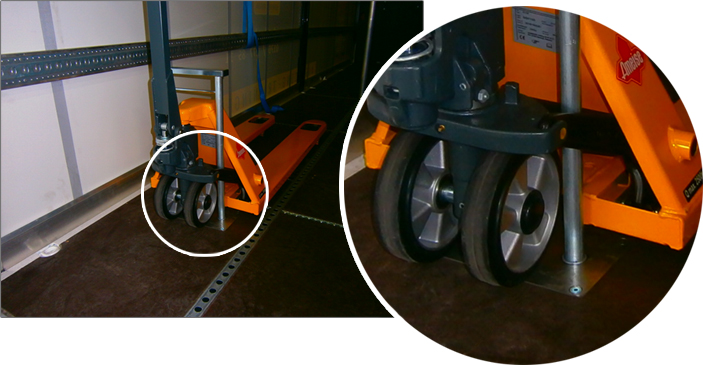
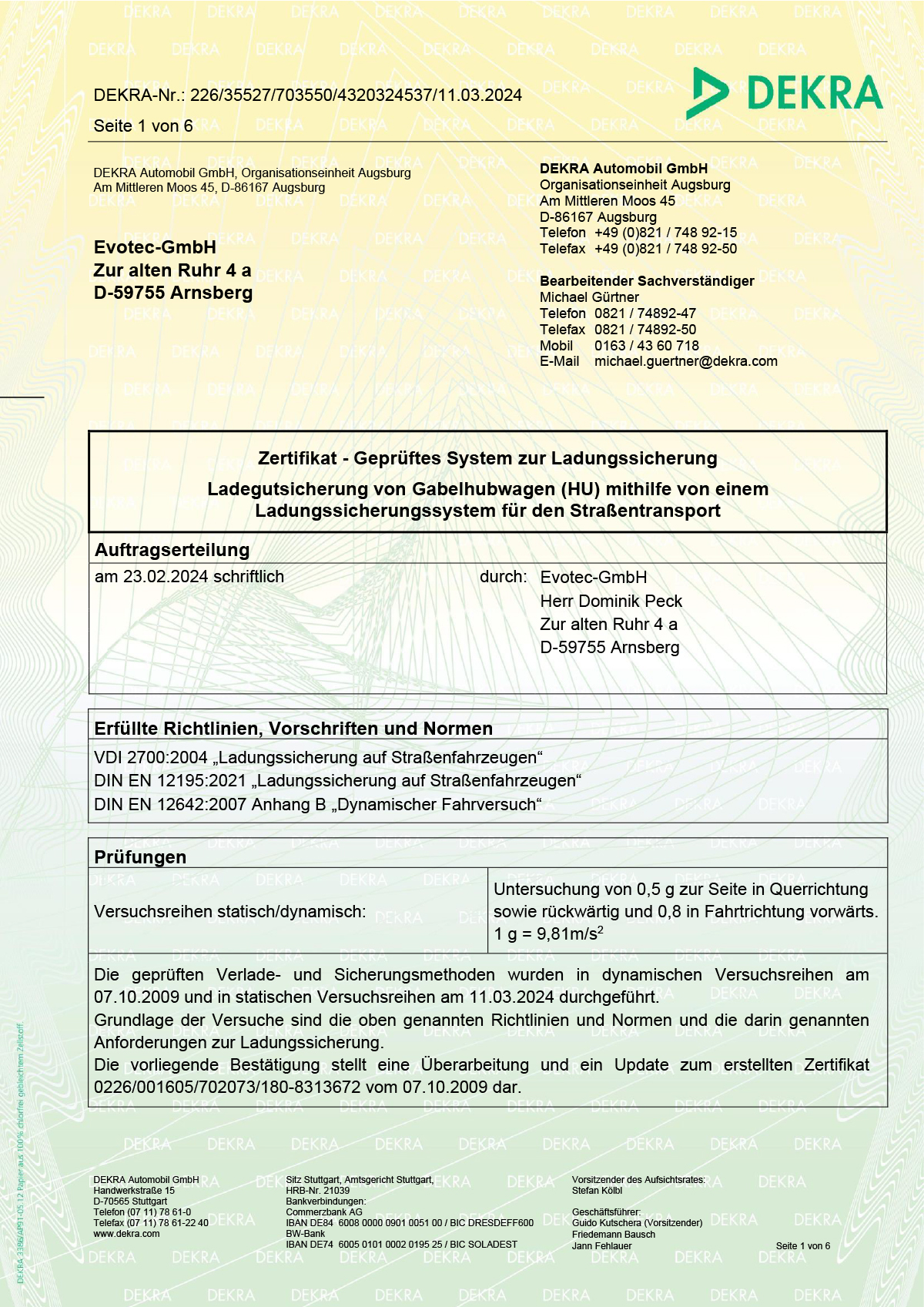
Our solution: The DEKRA-certified pallet jack safety system provides documented, verifiable load securing that satisfies all regulatory requirements. The DEKRA certificate serves as proof of compliance in the event of inspections or insurance claims, protecting drivers, fleet operators, and employers alike.